
 Articles
Neurocoder, i-Lab 2026 Winner: An innovative auditory brain implant for patients with profound hearing loss
It’s official: Neurocoder has won the i-Lab 2026 competition, one of the most prestigious distinctions for innovation in France. The Neurocoder project is developing an innovative auditory brain implant that combines an artificial intelligence algorithm with neurotechnologies to restore hearing in people with profound deafness who currently have no effective solution.
This national recognition acknowledges the potential of a breakthrough technology at the crossroads of neuroscience, artificial intelligence, and neurotechnologies. It marks a key milestone in the development of a solution intended to transform the care of severe hearing impairments.
An auditory brain implant born from public research
Originally named Braincoder, the project stems from the work of Brice Bathellier, CNRS/Inserm research director at the Institut reConnect. Building on promising preclinical results, the continued development and commercialization of this technology is being carried forward by Neurocoder, a startup whose creation is planned for early 2027. The startup will be led by Benjamin Bertrand (CEO), a serial entrepreneur who headed the DeepTech company Cardiawave for more than 10 years. He will be joined by Brice Bathellier (CSO) and Dan Scherrer (CTO), who brings over 20 years of leadership in medtech, with strong experience in product development, industrialization, and clinical execution.
Supported since its earliest days by NeurAL, the startup studio of the Paris Brain Institute, Neurocoder benefited from a structured maturation program that enabled it to reach several key milestones. During this support, the team conducted technological feasibility studies, deepened its market analysis, and refined its value proposition thanks to feedback from clinical experts and key opinion leaders (KOLs). This work also led the product to evolve to better meet the needs of people with deafness and of healthcare professionals. These advances were backed by €250,000 in funding, which made it possible to accelerate the development of the technology and prepare the next stages of its commercialization.
“Neurocoder is the culmination of nearly ten years of research that allowed us to decode the brain activity underlying sound perception, and to develop effective methods to reproduce it.” Brice Bathellier, CSO and co-founder of Neurocoder.
Profound deafness: a massive medical need that remains largely unmet
Profound deafness affects nearly 50 million people worldwide. Cochlear implants and current care have brought major advances, but 100,000 patients are still left without any effective solution. Beyond the hearing loss itself, these situations weigh heavily on independence, communication, and quality of life.
Translating sound into the brain’s language
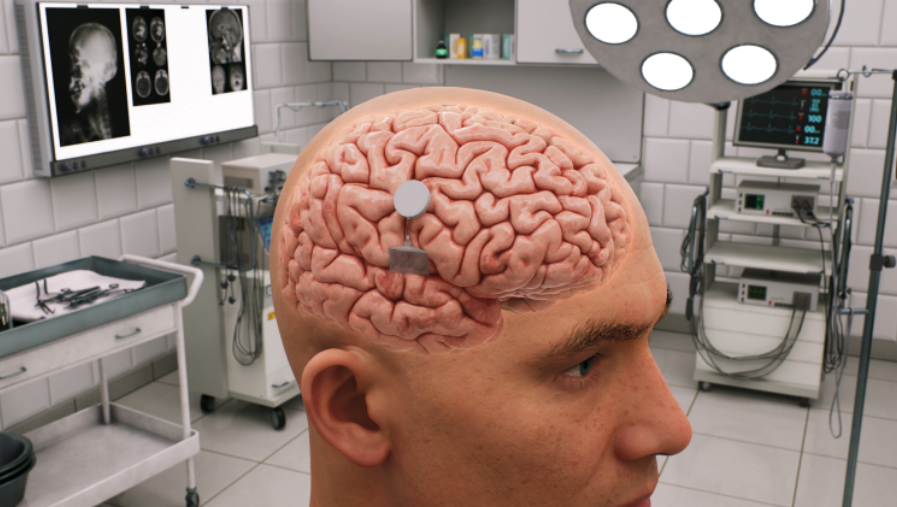
Neurocoder is developing a breakthrough technology that overcomes the limitations of current auditory brain implants. Thanks to embedded artificial intelligence, sounds are analyzed and then converted into a language the brain can directly understand, before stimulating the auditory cortex via a high-density surface electrode. The goal is ambitious: to preserve nearly all of the sound information in order to restore hearing close to natural levels. This includes situations that remain difficult for existing solutions, such as conversations in noisy environments or listening to music.
“We are seeking to restore not only the ability to detect sounds, but also everything they convey: the clarity, the emotion, and the connection that lie at the heart of the human experience.” Benjamin Bertrand, CEO and co-founder of Neurocoder.
Recognition that accelerates development
The i-Lab 2026 award is part of a trajectory that has already drawn attention within the innovation ecosystem. In June 2025, the project received the Béatrice Denys Prize, which recognized the scientific, clinical, and entrepreneurial potential of the technology. This new recognition from the i-Lab competition strengthens the credibility of its approach and is a real lever for reaching the next development stages.
Thanks to the support provided by i-Lab, the team will be able to continue its R&D work, refine the design of the device’s various modules, and optimize the performance of its brain implant. This funding will also help carry out preclinical studies and certain regulatory steps, which are essential before moving into the clinic and, ultimately, bringing this innovation to patients with profound deafness.
Neurocoder, the future startup serving patients with profound deafness
Backed by the reConnect Institute, the Pasteur Institute, CNRS, Inserm, and the Paris Brain Institute, the Neurocoder project reaches a new stage in its commercialization journey with this i-Lab distinction. The award acknowledges several years of research at the interface of neuroscience, artificial intelligence, and neurotechnologies, as well as the maturation work carried out to turn a scientific advance into an innovative solution with strong medical potential. It increases the project’s visibility among innovation ecosystem players and is an important lever for accelerating the next development phases. In the long term, Neurocoder aims to offer a reliable and robust solution for people with profound deafness by developing auditory neuroprostheses capable of communicating more directly and more effectively with the brain.
Learn more
Hearing loss affects billions of people worldwide and is a growing public health issue. To better understand the challenges related to hearing and the needs that medical innovations address, see the WHO fact sheet: https://www.who.int/fr/news-room/fact-sheets/detail/deafness-and-hearing-loss